New research reveals barriers to community-led housing in Latin America
Community land trusts could provide more affordable housing in Latin America, but our new research shows they must be adapted to local laws and cultural attitudes towards land ownership.

Community land trusts (CLTs) are non-profit organisations that hold land for the long-term benefit of a community. By separating ownership of land from the homes built on it, they can protect housing from speculation and keep it affordable for future generations. Although the model is established in parts of the United States and Europe, it remains rare in Latin America and the wider Global South.
Investigating this, a new study led by Dr Claudia Murray of Henley Business School examined how stakeholders responded to the idea of CLTs in Bahía Blanca, Argentina, and Temuco, Chile.
The researchers brought together municipal officials, landowners, developers, legal experts, investors, community representatives and non-governmental organisations. As CLTs do not currently operate in either city, these discussions captured participants’ first impressions of the model.
Different prospects in Argentina and Chile
In Bahía Blanca, participants identified existing legal and financial tools that could potentially support a community land trust.
These included surface rights, municipal housing registers, trust-based arrangements and existing housing legislation. Participants also proposed municipal seed funding, capturing increases in land value and converting underused heritage buildings into homes.
The researchers found that stakeholders became more positive as they discussed how the model could address local problems, such as informal settlements, infrastructure costs and unused land.
In Temuco, however, participants saw a greater conflict between CLTs and Chile’s legal system, which strongly protects individual property rights. Concerns included the possibility of creating a “forced community”, restricting people’s ability to move for employment and preventing families from passing land to future generations.
Recognising indigenous perspectives
The research also highlighted the importance of recognising indigenous perspectives. Mapuche participants did not reject collective responsibility for land but regarded it as ancestral and relational rather than something that should be placed within what was perceived as a Western contractual ownership model.
To overcome these barriers, researchers urge policymakers to work with Indigenous communities to develop culturally appropriate alternatives, rather than importing housing models created elsewhere.
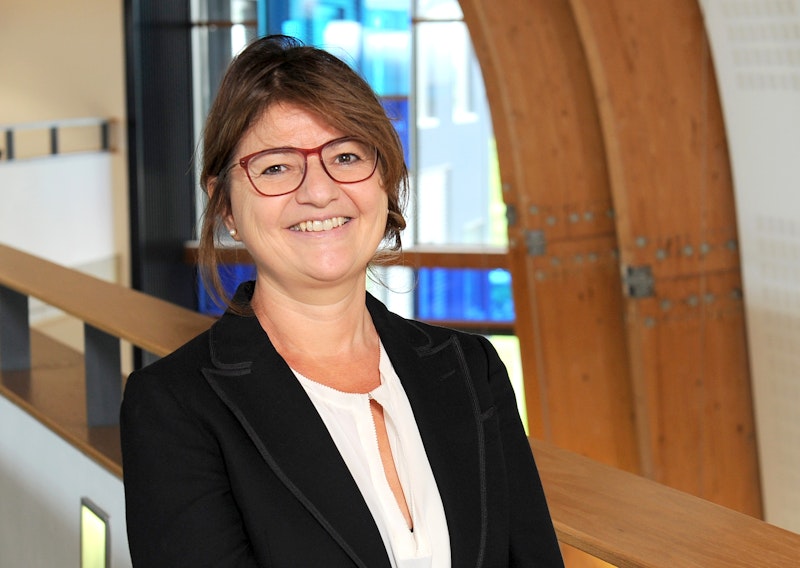
Dr Claudia Murray, Associate Professor in Development and Sustainable Construction, said:
"What surprised us most was that resistance to community land trusts was not primarily about technical or legal obstacles. In Chile, concerns about private property rights were deeply embedded in how people evaluated the model, whereas stakeholders in Argentina were more willing to explore collective approaches to addressing housing challenges. This shows that housing innovation is as much about societal values and political culture as it is about policy design."
The researchers conclude that Bahía Blanca could provide an opportunity to pilot a locally adapted CLT using existing planning tools, subsidies and partnerships. In Chile, more fundamental work is needed to develop approaches that respect Indigenous governance and deeply rooted attitudes towards property.
The study was conducted by Claudia Murray, Luis Vergara, Jose Maria Zingoni and Alba de la Cal Martín-Retortillo, and has been published open access in Housing Policy Debate.
To speak with any of our academic experts, email pr@henley.ac.uk.
You might also like

Professor Kathy Pain awarded fellowship to Academy of Social Sciences
This significant achievement recognises the contribution Professor Pain has made to social science.

Henley partners with Diversily to drive inclusive innovation
Henley's new research partnership with the leading inclusion consultancy, Diversily, will focus on developing the new Inclusive Innovation Playbook.

Henley Business School announces new MSc to equip graduates with interdisciplinary expertise in climate risk, sustainability and finance copy
New Masters course is among the first of its kind in the UK to combine finance expertise with real-world climate data